We’re holed up in rural New Hampshire for the Thanksgiving holiday this year, thirteen of us cousins and in-laws from both sides of the family sprawled across the quaint rooms that populate a one-time inn turned rental property complete with woodsmoke fireplaces, stone walls, picket fences, and a half-frozen pond below the deck, keeping us nowhere near the mall culture that surely swims with frantic angst far from these Frostian environs as Black Friday takes its toll.
Here our locavore tendencies run rampant, with microbrew IPAs and our favorite small-batch maple ryes and brandies on the sideboard ready for a third tasting session tonight, and the braided bread, summer pickles, hard cheeses, and harder salamis purchased from the farm stand down the street on Wednesday before the world turned mad. Here we play trivia games and read by the fire, holding love close as our various dogs and children play by our feet. We linger in our pajamas as we revisit old discourses. And though we know, out there, strife and selfishness runs rampant, it is as if the world were back to normal, somehow – at least until Saturday comes, and we must venture out again into the world.
This is not a political blog. Since our inception in 2007, however, we have done our part at Cover Lay Down to fight back against the subtle tyrannies of the consumptive society. Our insistence on offering links to purchase and stream music from sources closest to the hearts and wallets of the artists themselves, and our refusal to provide ads on this space, stem from an articulated desire to “walk the walk” of ethical consumption. And because a blog is dialogic, so do we also, from time to time, step up onto the soapbox to speak out specifically on why, and how, to better support the local and the intimate – a position befitting a blog whose ethnomusical mandate explores the coincidence of sharing-through-coverage and the communal purposefulness of folk.
Today, then, for the fourth iteration, we take the time to provide our own antithesis to the buy-everything-now message that seems to typify the ever-lengthening holiday season in the Western world by offering a 2017 edition of our anti-commercialist, pro-artist gift giving guide for the holidays – a harbinger of things to come after almost two months of sparse sabbatical – and the promise of a more focused Patreon feature to follow, celebrating the new farm-share equivalent for musicians which continues to intrigue us as we search evermore for ways to support and sustain the work and craft of the musical artist in the new millennium.
Read on, then, for a reworked and revitalized treatise, plus an updated list of methods and mechanisms for supporting the local and the soul-serving this giving season…and, of course, a few songs to get you into the spirit. And then join us again later this weekend, as we scour the surface of Patreon for your inner-circle listening pleasure.
 Black Friday is duly noted for causing havoc and stress in the mass marketplace. But if we greet its well-intentioned antithesis Buy Nothing Day with suspicion here at Cover Lay Down, it is because there is nothing inherently anti-commercial about merely deferring product-purchase if we still plan to make it to the mall eventually.
Concerns about the way big business undermines and eats away at the profitability of direct creator-to-consumer relationships are real and valid, of course. But to see consumption as all or nothing is problematic: those who quite literally refuse to buy things unwittingly undermine their own communities, for example, by cutting into taxes for schools and roads, and by destroying the ability of neighborhood artists and local community retailers to survive doing what they love.
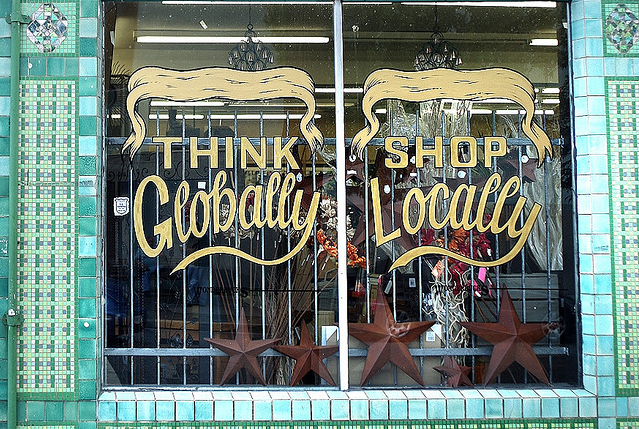
Happily, however, there’s a whole spectrum of opportunity outside of the false dichotomy of Black Friday and Buy Nothing Day. And the answer isn’t buying nothing – it’s buying local.
We’ve long championed buying local here at Cover Lay Down. We frequent local farmer’s markets and crafts fairs; we buy apples from orchards, and beer from the brewery; we keep maple syrup and honey that was harvested by friends. In our musical purchases, we try to buy at shows, as this tends to provide the most money for artists, and helps support local venues; we’ve posted about library finds several times, too, and celebrate regional labels and artists wherever possible.
But in the digital age, buying local means not only supporting your local shops, producers, and buskers – it also means supporting the small, the immediate, the independent, and the community-minded. As such, wherever possible, the links which we offer alongside our downloadables and streams go directly to artist websites and other artist-recommended sources, the better to respect the rights and ongoing careers of creators and craftspersons everywhere.
Which is to say: we’re about authenticity and sustainability here, a set of concepts deeply entwined with the organic and acoustic music we celebrate. With that in mind, here’s some suggestions for how to honor the community sentiment which stands at the foundation of folk music, even as you look for ways to show your appreciation and love this holiday season.
1. Give the gift of recorded music. Cover Lay Down stands behind every artist we blog, and many of our regular features, such as our New Artists, Old Songs series, focus on new and newly-reconsidered music and musicians worth sharing with friends. So browse our archives and your own, and then buy CDs and downloads for friends and family direct from artist websites, independent artist-friendly labels like Signature Sounds, Compass, Waterbug, Bloodshot, and Sugar Hill Records, promotional houses like Hearth Music and Mishara Music, and small artist collaboratives and fan-fueled microlabels like Mason Jar Music, Obsolete Recordings, Yer Bird, Northplatte, and Asthmatic Kitty. Or, if you prefer to centralize your shopping, skip the chain stores and internet behemoths that undermine local mom-and-pops and pay mere pennies on the dollar, and shop instead at your local struggling music shop, Bandcamp, CD Baby, or even Etsy.
2. Give the gift of time and presence. It’s good to get out with friends, and shared experiences make the best kinds of gifts; by linking directly to artist web pages, we make it as easy as possible to check out tour dates. Support your local coffeehouse or small venue by booking a table or row for you and your loved ones. Take a child to their first concert, and open up their world to the immediacy and intimacy of live performance. Take a friend, or a group, and open them up to a new artist’s work. Or host a successful house concert, and invite friends, the better to share the artists and music you love. And if you’re in the American Northeast region, or just know someone who lives near Springfield, Northampton, Hartford, the Berkshires, or Worcester, why not plan on joining us December 9 – either yourself or by proxy, through the gift of live concert – for Cover Lay Down’s 10th anniversary celebration: an intimate mostly-covers show with Mark Erelli celebrating the pre-release of his new all-covers album MIXTAPE, featured here in October.
3. Give the gift of access. Spring for a gift subscription to Daytrotter for the music lover in your life, and let them download years worth of studio sessions and stream exclusive live sessions from a broad set of musicians. Or sign them up for Concert Window, which offers multiple live online concerts every night from some of our favorite folk venues and artist living rooms, and where two-thirds of profits go to those musicians and venues. The live performances and sessions which these subscriptions net can be viewed alone, or shared with a friend over a beer on the couch – and the virtual concert is especially apt for friends housebound by physical limitation, geographical isolation, or preference.
4. Give the gift of artistic sustainability. As noted above, we’ll be turning in a full feature on Patron, the newest subscription-only model on the web and perhaps the most sustainable way to support the ongoing work of the artist-as-developer, in the next day or three as a complement to today’s reworked repost. But other crowdfunding sites like Kickstarter, Indiegogo, and Pledge Music help artists make art, too, and donations in someone else’s name are always a nice gift – it shows you’re thinking of them, and it honors the connection you share through music. And just as donating to your local radio station can net you a free mug, crowdfunding comes with the promise of product – a reward you can redirect, if you give in someone else’s name.
So browse the folk categories at Kickstarter, Indiegogo, and Pledgemusic, or ask around for recommendations on what to support. Some examples we’re excited to share this year: Popfolk goddess Jill Sobule is back in the studio after 9 years, looking for our support for Nostalgia Kills, an album of autobiographical short-story originals designed to prove that great artists can still produce potent songcraft after 40; pledge gifts at various levels include a comprehensive digital catalog of Sobule’s studio originals, duets, and live cuts, a night at the Museum of Natural History, a personal theme song, and private songwriting sessions over Skype. Philly-based neo-Celtic duo House Of Hamill, whose as-yet-untitled sophomore album is written but needs to be recorded with our help, offer a wonderful tee-and-hoodie design, a crazy night in NYC, and a chance to play on the album itself alongside the usual music in hard-and-soft-copy as incentives. Childsplay, an ongoing non-profit project featuring instruments exclusively crafted by Bob Childs and a cast of world-renown professional players, whose early recordings with Aoife O’Donovan and others so thrilled our listeners here at Cover Lay Down in their previous iterations, is looking for your support for their seventh and final album with Irish singer Karan Casey as Childs and company wind down what has become a stalwart of symphonic presentation of traditional American, Canadian, and Irish folk traditions.
Over at Indiegogo, long-time stalwart of the revival folkscene Reggie Harris (who, along with Greg Greenway, will be bringing their deep discussion and music of growing up white and black in the South to our Unity House Stage this January) seeks support for his first solo album after 40 years of touring with partner Kim Harris as a duo; I’ve heard some of these politically charged yet ever-so-intimate songs – both covers and originals – in the late-night tents at Falcon Ridge Folk Fest, and highly recommend both the support and the output. At Pledgemusic, impending delight from 10 String Symphony’s Generation Frustration, a neo-traditional album-to-be whose lush, fiddle-driven soundscapes haunt listeners with the angst and determination of the Millennial generation, appropriately offers home-roasted coffee and original instrumentals alongside more typical recordings and tees in the mix for pledgers. And if it’s more delicate indie-folk you’re looking for, then lend some support to the ghostly soundscapes of The Jellyman’s Daughter, a rising duo from Edinburgh, UK, whose rich, lush cello-and-voice-driven album Dead Reckoning hews close to the source, with offers of heavyweight vinyl, stickers, music lessons and handwritten lyrics alongside songs crafted for performance in stone churches and graveyards.
5. Give the gift of promotion. This one is mostly about giving the artists themselves some of your hard-earned time and energy, but artists need gifts, too. So like artists’ Facebook pages, and show others in your feed what you are listening to, the better to spread the word. Join a street team, and volunteer (by yourself or with a friend, as a fun gift date) to help sell CDs, hang posters, or man the door at local coffeehouses and clubs, thus freeing artists to spend their time playing, meeting the crowd, and sustaining their own fan base. Start a blog, for you or a friend, or donate to support one in their name.
6. Stay tuned. Looking for something a little more concrete in the way of coverfolk recommendations? Willing to wait for a few more weeks to decide which albums to purchase for your loved ones and friends? Just as we’ve done for the past five years, Cover Lay Down will be sharing our “best of 2017″ by mid-December; the items on those lists constitute our highest recommendations, and function as a concise gift guide for the coverfolk lover in your life. And if it’s holiday music you’re looking for, just wait until next week, when we kick off our coverage of this year’s seasonal releases…
Until then, here’s a short set of relevant covers to get you in the gift-giving spirit.








 I’m not exactly the patriotic type. I’ve been to more countries than states; I prefer solitude to mall culture. Heck, we don’t even have basic cable. But all power-hungry, commercial/corporate complex, bittersweet modernity aside, I believe in the ideals which frame the constant American dialogue with itself — including first and foremost the requirement that we keep talking, lest we abdicate our role as government of the people, by the people, and for the people.